
Rhinoplasty in Thailand – Nose Surgery in Bangkok

Rhinoplasty, often called a nose job or nose reshaping, changes the shape, size or proportions of the nose. It may be performed for appearance, to address a structural breathing problem, or for both reasons. Every operation is individual: the surgeon recommends the technique only after reviewing your goals, medical history, photographs and nasal anatomy.
Bangkok Health Service helps international patients coordinate surgeon consultations, hospital appointments, medical information, accommodation and transport in Bangkok. We do not replace the surgeon’s assessment, and no particular technique, result, anesthesia plan or recovery timetable can be confirmed before medical review.
Table of Contents: Rhinoplasty in Thailand
What can rhinoplasty address?
Depending on the patient’s anatomy and goals, rhinoplasty may be considered to:
- reduce or build up the bridge of the nose;
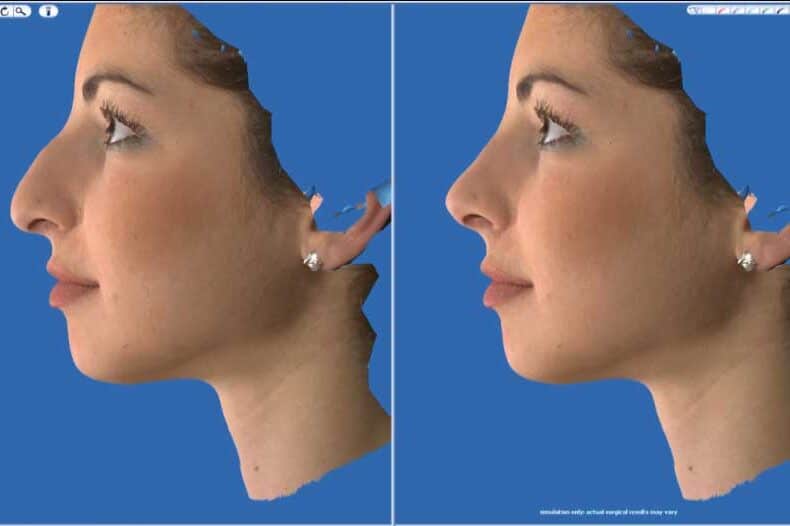
- reduce a small hump or reshape a larger dorsal hump;
- refine, support or reposition the nasal tip;
- change the size or shape of the nostrils;
- improve proportions or asymmetry;
- reconstruct the nose after injury or previous surgery; or
- combine external reshaping with assessment of a breathing problem.
Perfect symmetry cannot be guaranteed. The aim is an improvement that suits the patient’s facial proportions while protecting nasal function.
Cosmetic rhinoplasty, septoplasty and functional surgery
Rhinoplasty changes the external shape or structural proportions of the nose. Septoplasty is a different procedure that corrects a deviated or obstructing septum. When appearance and breathing both need attention, a surgeon may recommend a combined septorhinoplasty or another functional plan.
A cosmetic package must not be assumed to include septoplasty, breathing correction or reconstruction. These procedures require separate assessment and quotation.
Open and closed rhinoplasty
The words “open” and “closed” describe how the surgeon accesses the nasal structures.
- Closed rhinoplasty: incisions are placed inside the nostrils. This can be suitable for selected changes and leaves no external incision.
- Open rhinoplasty: an additional incision is made across the columella between the nostrils. It gives the surgeon wider access and may be recommended for complex reshaping, tip work, grafting or revision surgery.
Neither approach is automatically better for every patient. The recommended method depends on the required correction, previous surgery, available cartilage, skin thickness and the surgeon’s examination.
Other rhinoplasty techniques and treatment plans
The final plan may involve hump reduction, tip reshaping, augmentation, cartilage grafting, nostril reshaping, revision rhinoplasty or functional nasal surgery. Cartilage may come from the septum, ear or, for some larger reconstructions, the rib. Implants or other materials may also be considered in selected cases.
The treatment name alone does not determine the final price or recovery plan. The surgeon must confirm the exact procedure and whether additional tests, graft material, hospital admission or a longer stay in Bangkok are needed.
Consultation and medical review
Before travel, Bangkok Health Service can collect the requested medical form and photographs for preliminary review. The surgeon may ask about previous nasal surgery or injury, breathing problems, medications, allergies, smoking and the patient’s expectations.
The in-person consultation in Bangkok remains essential. It may include examination of the outside and inside of the nose, facial measurements, photographs and discussion of realistic outcomes. The surgeon then confirms the operative plan, anesthesia, facility, expected hospital stay, risks, aftercare and fitness-to-fly schedule.
Anesthesia and hospital stay
Rhinoplasty may be performed under local anesthesia, local anesthesia with sedation or general anesthesia. The choice depends on the operation and the patient’s medical assessment. A limited procedure may be outpatient, while a more extensive operation may require observation or one or more hospital nights.
Do not choose a travel itinerary from the procedure name alone. Bangkok Health Service builds the itinerary around the surgeon’s recommendation and the confirmed treatment plan.
Recovery after rhinoplasty
Swelling, congestion, tenderness and bruising can occur after surgery. A splint, tape or internal dressing may be used for several days. Many patients plan approximately one week away from work or normal obligations, but recovery varies with the procedure and the individual.
Light daily activity may resume before strenuous exercise. The surgeon may restrict exercise, swimming, sun exposure, nose blowing, pressure from glasses and any activity that could injure the nose. Visible swelling usually improves gradually, while residual swelling and the final contour can continue changing for many months and sometimes a year or longer.
International travel is not cleared by a fixed website timetable. The surgeon determines follow-up and fitness to fly. Patients should remain in Bangkok for the period recommended for their specific operation and contact the medical team promptly if they develop unexpected bleeding, fever, increasing pain, breathing difficulty or another concern.
Risks and possible complications
All surgery has risks. Rhinoplasty risks can include bleeding, infection, anesthesia complications, numbness or altered sensation, prolonged swelling, scarring, asymmetry, difficulty breathing, an unsatisfactory appearance, septal perforation and the possibility of revision surgery. The surgeon explains the risks that apply to the planned operation before consent.
Online information cannot determine whether rhinoplasty is appropriate for a particular person. Suitability and the balance of benefits and risks must be discussed directly with the surgeon.
Rhinoplasty prices and the 3-night package
Costs vary because “rhinoplasty” covers procedures of very different complexity. Technique, anesthesia, surgeon and facility fees, graft material, hospital stay, tests and follow-up can all affect the quotation.
Use the current Thailand plastic-surgery price list for procedure-level guidance. The 3-night Bangkok package is a separate travel product for an eligible Small Hump reduction under local anesthesia. Its starting price must not be presented as the price for every type of rhinoplasty.
How Bangkok Health Service coordinates the journey
- You send your goals, medical form and the requested photographs.
- We coordinate preliminary review and obtain a recommendation or request for further information.
- You receive a treatment outline and quotation for the selected dates.
- We coordinate the in-person consultation, hospital or clinic booking, accommodation and scheduled transfers that are included in the agreed plan.
- Follow-up and departure are arranged around the surgeon’s instructions.
Request a Rhinoplasty Assessment
Send your questions and preferred travel dates. We will explain which medical information and photographs are needed before a surgeon can assess your case.

Frequently Asked Questions
What can rhinoplasty change?
Rhinoplasty may change the bridge, tip, nostrils, size, proportions or symmetry of the nose. It may also be combined with evaluation of structural breathing problems. The surgeon determines what can be changed safely after examining the patient’s anatomy and goals.
What is the difference between rhinoplasty and septoplasty?
Rhinoplasty reshapes the external appearance or supporting structure of the nose. Septoplasty corrects a deviated or obstructing septum. Some patients need both procedures, but a cosmetic rhinoplasty or Small Hump package does not automatically include septoplasty or breathing correction.
Is open or closed rhinoplasty better?
Neither method is best for everyone. Closed rhinoplasty uses incisions inside the nostrils. Open rhinoplasty adds a small incision across the columella and gives wider access for complex reshaping, grafting, tip work or revision surgery. The surgeon recommends the approach for the individual case.
Will I have local or general anesthesia, and must I stay in hospital?
That depends on the operation and the medical assessment. A limited procedure may use local anesthesia and be outpatient. More extensive rhinoplasty may require sedation or general anesthesia and a hospital stay. The confirmed plan and quotation will state what applies.
How long does rhinoplasty recovery take, and when can I fly?
Many patients allow about one week away from normal obligations, but swelling continues to improve for months and the final contour can take a year or longer to settle. Exercise restrictions, follow-up and fitness to fly depend on the procedure and the surgeon’s assessment. Do not book departure around a fixed online recovery promise.
How much does rhinoplasty cost in Thailand, and is there a package?
The cost depends on the exact procedure, anesthesia, facility, graft material, hospital stay and follow-up. See the current Bangkok Health Service price list for procedure-level guidance. A separate 3-night package is available for eligible Small Hump reduction patients; it is not a universal price for every rhinoplasty.