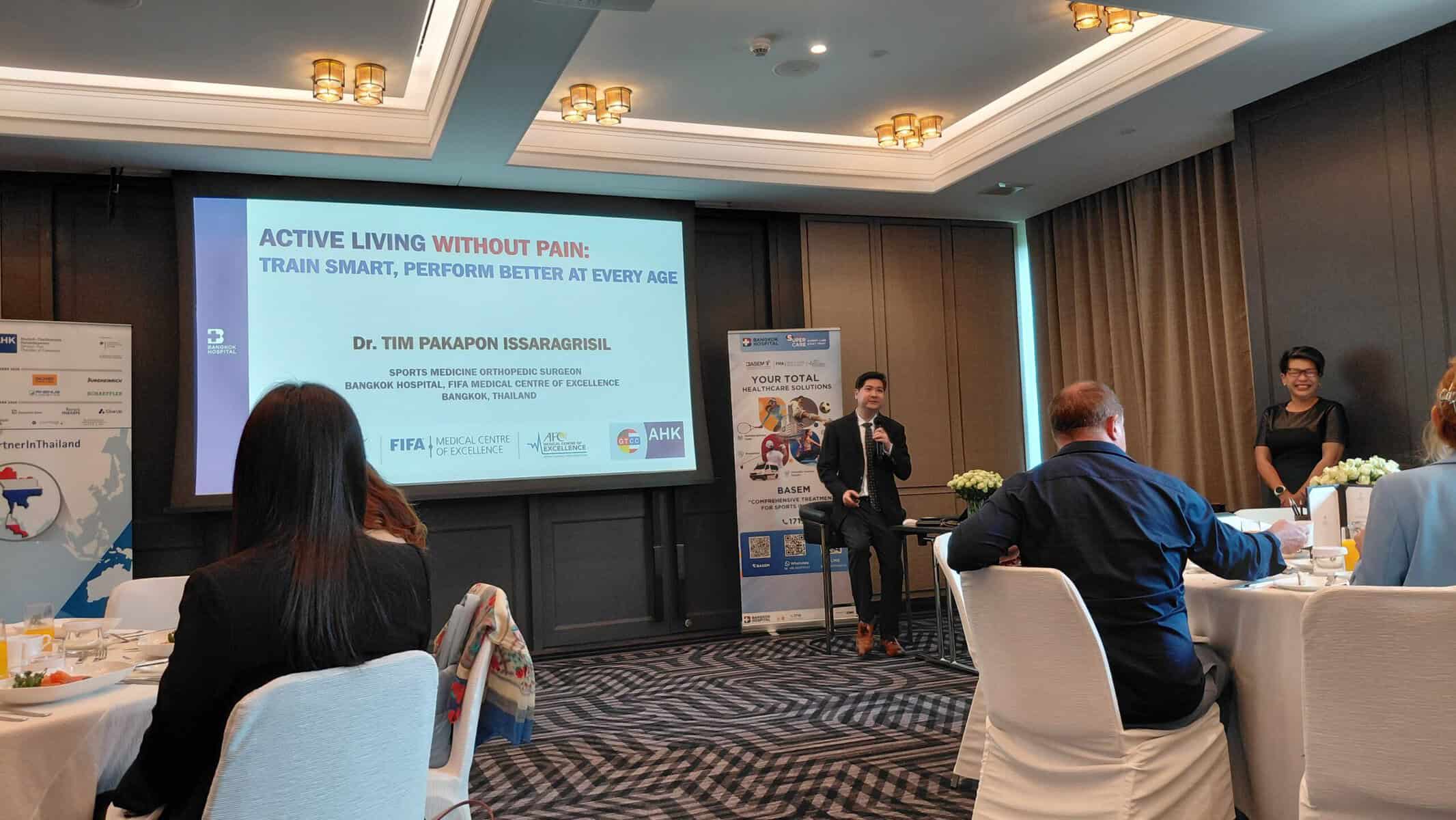
Active Living Without Pain: What We Learned from Bangkok Hospital’s Sports Medicine Seminar
Why This Topic Matters
Many people experience knee pain, joint discomfort or recurring injuries, especially if they are active, getting older, returning to exercise after a break, or recovering from a previous injury.
For some people, knee pain is temporary and improves with rest, physiotherapy and better training habits. For others, it may be a sign of a more serious structural problem that needs proper medical assessment.
One of the key messages from the seminar was that pain should not always be ignored, but it also does not always mean surgery is needed. A correct diagnosis, the right treatment plan and a structured recovery program can make a big difference.
For international patients, this type of assessment can sometimes be combined with broader medical planning, such as a health check-up in Thailand, especially if the patient wants a clearer overview of their general health before starting a recovery or training program.

Knee Pain: When Should You Be Concerned?
One important part of the presentation focused on when knee pain may require medical attention. Warning signs may include:
- Swelling within a few hours after injury
- The knee giving way or feeling unstable
- A locked knee
- Difficulty fully straightening the knee
- Pain when putting weight on the leg
- Persistent swelling after activity
- Repeated kneecap dislocation
These symptoms may suggest a structural injury, such as a meniscus injury, ligament injury or another condition that should be assessed by a specialist.
The seminar also showed examples of meniscus injuries and recovery after meniscus repair, highlighting the importance of proper diagnosis and follow-up.
Recovery Is More Than Rest
Another important point from the seminar was that recovery is not only about stopping activity. A good recovery plan may include several steps, depending on the injury and the person’s activity level.
- Reducing inflammation and pain
- Restoring mobility
- Rebuilding strength
- Improving balance and movement control
- Gradually returning to activity
- Monitoring progress to avoid reinjury
This is especially important for people who want to return to sports, exercise, golf, running, cycling, hiking or simply an active lifestyle.
For people who need a more structured recovery environment, Bangkok Health Service also works with wellness and recovery options such as a joint mobility and recovery retreat in Thailand. This type of stay may be useful for people who want time, support and structure around mobility, gentle activity and recovery.
Train Smart = Stay Active Longer
The seminar introduced a simple framework for staying active and reducing the risk of recurring injuries. The idea was that active living requires a system, not just a single treatment.
The five key areas were:
- Mobility
Keeping the joints and muscles moving properly. - Strength
Building support around the knee, hip and lower body. - Control
Improving balance, coordination and movement quality. - Recovery
Allowing the body to repair and adapt after training or injury. - Monitoring
Following progress and adjusting activity before pain becomes a bigger problem.
This approach is useful not only for athletes, but also for older adults, recreational sports participants and anyone who wants to stay active without unnecessary pain.
Who Can Benefit from a Sports Medicine Assessment?
A sports medicine consultation may be helpful for people who:
- Have knee pain during or after activity
- Have had a sports injury and want a safe return-to-activity plan
- Experience recurring swelling, instability or pain
- Want to avoid making an injury worse
- Are active but feel limited by joint or muscle pain
- Want guidance before starting or returning to exercise
- Need physiotherapy, rehabilitation or a structured recovery plan
This type of assessment can be relevant for both younger and older patients. It is not only for professional athletes. It can also be helpful for people who simply want to walk, travel, train, play sports or stay independent for longer.
Not Every Knee Problem Requires Surgery
One of the most useful takeaways from the seminar was that knee pain should be evaluated properly before deciding on treatment.
Depending on the condition, treatment may include physiotherapy, exercise therapy, medication, injections, bracing, lifestyle changes, rehabilitation or, in some cases, surgery.
The right option depends on the diagnosis, symptoms, activity level, age, medical history and personal goals.
For patients with more advanced knee conditions, Bangkok Health Service can also help coordinate orthopedic consultations and treatment planning in Thailand through selected hospitals and specialists. You can read more about broader treatment coordination on our surgery in Thailand information page.
Bangkok Health Service and Specialist Access in Thailand
Bangkok Health Service attended this seminar to stay updated on sports medicine, injury prevention and rehabilitation options available in Thailand.
For clients who are interested in sports medicine, knee pain assessment, injury recovery or active ageing programs, we can help connect them with the right hospital and specialist in Bangkok.
This may include:
- Appointment coordination
- Specialist consultation booking
- Hospital communication
- Hotel and transfer planning if needed
- Local support during the visit to Bangkok
Our role is to help international clients understand their options and access the right medical expertise in Thailand. For people who need more than a single appointment, we can also help create a complete travel plan using selected medical packages in Thailand, depending on the patient’s needs and the recommendation from the hospital.
Final Thoughts
The main message from the seminar was simple: active living requires a system, not a single treatment.
For many people, the goal is not only to remove pain, but to move better, recover properly and stay active for longer.
Knee pain, sports injuries and recurring discomfort should not be ignored, but they should also be assessed carefully before deciding on any treatment.
With the right medical evaluation, physiotherapy guidance and recovery plan, many people can return to a more active and confident lifestyle.
Related Information
If you are researching medical or recovery options in Thailand, these pages may also be useful:
- Health Check-Up in Thailand – for general health screening before or during your stay.
- Joint Mobility & Recovery Retreat in Thailand – for structured mobility, recovery and wellness support.
- Surgery in Thailand – for information about hospital-based treatment planning in Thailand.
- Medical Packages in Thailand – for patients who need help planning appointments, accommodation, transfers and local support.